

Most people preparing for retirement have been told to ask one question: Do I have enough money?
It’s the right question. It’s just not the only one — and it’s not even the question that determines life in retirement is meaningful. Plenty of people retire with a sound financial plan and still find themselves restless, unmoored, or quietly asking, Is this it? The savings worked exactly as designed. The life around the savings was never designed.
That gap is what the Humessence Retirement Readiness Self-Assessment was built to measure.
What “Readiness” Actually Means
A financial plan answers how you’ll fund retirement. It says nothing about what you’re retiring to. For a lot of us, work has quietly supplied things we never put on a budget: a reason to get up, a built-in community, a sense of who we are, a rhythm to the week, problems worth solving. When we retire, we leave work and these side benefits behind. This is why it’s important to think about them on purpose.
Research backs this up. Role theory holds that a career isn’t just an income source, it’s one of the central roles that organizes identity. Losing it can create what researchers call “rolelessness.” Multiple studies suggest that role loss correlates with decreased life satisfaction and is linked to poorer adjustment, elevated stress, depression, and anxiety. And, being in a strong position financially doesn’t inoculate you against rolelessness. But with thoughtful planning, everyone has an opportunity to purposefully create a new and fulfilling retirement.
So the more honest version of “Am I ready?” is really eight questions, not one.
The Eight Dimensions The Assessment Measures
The Retirement Readiness Self-Assessment looks at the parts of retirement a financial spreadsheet can’t capture. You rate a series of statements on a 1-to-5 scale, and the results map across eight dimensions:
- Purpose & Identity — the values and direction that define your next chapter, especially once “what I do” stops answering “who I am.”
- Relationships — the people and family you want to keep close, or grow closer to, when work stops supplying them automatically.
- Health & Energy — the daily habits that keep you physically and emotionally capable of enjoying the time you’ve earned.
- Learning & Growth — staying curious, engaged, and mentally alive rather than coasting.
- Service & Legacy — the chance to serve, mentor, or give back in ways that matter to you.
- Mindfulness — the practices that keep you self-aware and present: nature, meditation, journaling, or simply noticing what brings you contentment and vitality. Retirement hands you more open time than you’ve had in decades — mindfulness is what keeps it from slipping by unnoticed.
- Financial Confidence — a light-touch check on your peace of mind about money. (The assessment isn’t financial advice; it’s about how your financial reality affects your sense of freedom.)
- Emotional Resilience — your capacity to navigate change and uncertainty, because retirement is one of the larger transitions a person makes.
Read that list again and notice that these are different muscles that enable a strong retirement; most people have only been training one of them.
How To Actually Use Your Results
The assessment takes a few minutes. When you finish, you get a snapshot of where you stand, and a fuller report — with your answers and reflection prompts — delivered by email.
But the score isn’t the point, what it reveals is. Maybe your finances are solid and your health habits are strong, but you’ve never seriously asked what gives your days meaning once the work identity is gone. Maybe you’ve got purpose in spades but have quietly let your closest relationships drift away. The assessment surfaces those imbalances while you still have time to do something about them.
Use it as a starting line, not a verdict. Where are you strong? Where have you not done the thinking yet? What’s the one dimension that, if you ignored it, would quietly undermine all the others? That’s the conversation worth having — with yourself, with the people closest to you, and eventually with someone trained to help you build the plan.
A First Step, Not The Finish Line
A fulfilling retirement is the goal, and the assessment is the beginning. Creating a plan for having a well-rounded retirement is the process. Humessence offers a Finding Fulfillment in Retirement Coaching Program that can help you devise a plan through an eight-session group program, led by certified coaches.
Where the assessment shows you the terrain, the program helps you walk it: turning scattered insight into a personal roadmap. Navigating this with peers helps you consider options and gain perspective. But doing this on your own is also useful as well. The key is, do this work. Be proactive. Create a life of deep meaning in your retirement and don’t just settle for a life away from work – create a life of your dreams!
A Word For The Organizations They’re Leaving
Every retirement has a second stakeholder: the employer. When someone with decades of experience walks out the door, what goes with them isn’t just a role to backfill — it’s relationships, judgment, institutional memory, and the quiet mentorship that never appeared in any job description. Most organizations plan the mechanics of a departure — the paperwork, the benefits, the going-away lunch — and almost none plan the handoff: the deliberate transfer of knowledge, and the human support that lets both the person leaving and the people staying do it well.
That gap costs both ways. A thoughtful transition plan protects the organization from losing hard-won expertise overnight, and it signals to everyone still watching that this is a place that honors a career rather than simply processing an exit. Humessence works with organizations to build exactly that — customized support that can range from sponsoring a departing employee (or a whole late-career cohort) through the Finding Fulfillment in Retirement program, to structuring knowledge transfer and mentoring, and a dignified handoff that leaves incumbents with tools and information to thrive. If you lead a team with people approaching this chapter, planning for it well is one of the most strategically important things you can do.
Finally…
None of this is really about simply leaving work. It’s about what you’re building next. The assessment is simply the first, low-stakes step in a much larger purpose. You’ve spent decades preparing financially for this. Spend a few minutes preparing for the rest of it.
Take the free Retirement Readiness Self-Assessment →
Author Bio:
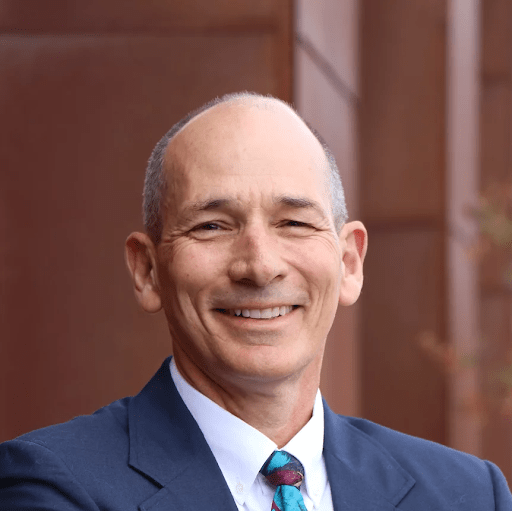
After leading teams of various sizes for 29 years, I served as a Leadership
Development Program Manager for 4 years. In that capacity, I reviewed research on what makes leadership development programs effective and applied those learnings in a new program that I created called HUMan-Based Leadership development (HUM-B- LE). This program was successfully applied across 5 operations leadership teams and ultimately resulted in a measurable improvement in culture for the broader team of employees.
I earned my BS in Industrial Engineering from the University of Michigan and an MBA from the University of Colorado. In 2018 I earned a Certified Professional Coach designation and use these skills in support of helping leaders improve. I enjoy helping leaders grow a culture of psychological safety and employee engagement. Research demonstrates that these attributes correlate with high performance and improved business results. My base purpose is to make a difference in the lives of employees by helping leaders create these environments.