
Giving and Receiving Feedback Training for Teams
A practical workplace feedback workshop that helps team members communicate with more clarity, receive feedback with less defensiveness, and build stronger trust across the organization.
90-minute seminars or 2.5-hour workshops.
In-person, virtual, and hybrid formats starting at $2,000.
Virtual or In-Person
Custom Team Scenarios
Practical Feedback Practice
Home » Training Solutions » Team-Building Workshops » Giving & Receiving Feedback
Feedback Training Workshop Overview
Feedback is one of the most important conversations a team can learn to have well. When feedback is avoided, unclear, or delivered without care, teams lose opportunities to build trust, improve performance, and address small issues before they become larger patterns.
Humessence helps teams build a shared language for feedback so people can speak more honestly, listen more openly, and turn everyday conversations into opportunities for growth.
Whether your team avoids giving feedback altogether or struggles with sugarcoating and unclear messaging, this interactive feedback training offers a psychologically safe environment to strengthen communication and accountability. Participants learn how to deliver feedback that’s both honest and constructive—while receiving it with openness and curiosity.
We’ve built upon well-known feedback frameworks like the SBI model (Situation–Behavior–Impact) and the feed-forward technique to develop a holistic feedback process. This moves our training beyond theory to a practical flow of how feedback is discerned, delivered, and discussed. Teams engage with live scenarios and real-time coaching exercises to apply what they learn in the moment. The result is a culture where feedback isn’t avoided or feared—it becomes a shared language for growth and connection.
Whether delivered as an on-site workshop, virtual feedback workshop, or hybrid cohort, this experience equips your team with practical skills they can use immediately. Over time, those new habits strengthen engagement, trust, and long-term retention.
Why Feedback Skills Matter in Every Workplace
Poor feedback habits create more than communication issues. They lead to unclear expectations, avoidant conversations, damaged trust, and missed opportunities for growth.
When teams know how to give and receive feedback well, communication becomes more direct, relationships become more resilient, and accountability becomes easier to practice.
Great feedback helps people feel seen, supported, and challenged in ways that are useful. It gives teams a way to clarify expectations, repair small disconnects, and keep learning together before tension turns into conflict.
That is why feedback is not just a soft skill. It is a team capability. A healthy feedback culture helps people speak honestly, listen with openness, and stay connected when conversations become uncomfortable.
Research consistently shows that teams who practice effective, emotionally intelligent feedback experience greater psychological safety, improved collaboration, and stronger engagement (Edmondson, 1999; Kluger & DeNisi, 1996; Gallup, 2022). That’s why feedback isn’t just a soft skill—it’s a measurable driver of retention, performance, and results. Our feedback training helps leaders, employees, and peers apply practical frameworks to turn communication breakdowns into growth opportunities.
When Feedback Breaks Down
People avoid hard conversations
Expectations stay unclear
Defensiveness increases
Trust erodes quietly
Feedback feels personal
When Feedback Works
People address issues earlier
Expectations become visible
Curiosity and ownership increase
Trust is reinforced through honesty
Feedback becomes behavior-based
Designed for Teams, Peers, and Cross-Functional Groups
This feedback workshop is designed for groups that need feedback to move more easily across the organization — not only from managers to direct reports. It is especially useful for:
Intact Teams
Intact teams that want healthier communication habits
Cross-Functional Groups
Cross-functional groups that need better alignment across departments
Project Teams
Project teams navigating pressure, deadlines, or competing priorities
Teams Navigating Change
Teams experiencing avoidance, tension, or unclear expectations in ambiguity
Boards & Comittees
Diverse groups building a shared feedback language around common goals
Feedback Cultures
Organizations working to make feedback a more normal part of the culture
Unlike manager-specific feedback training, this workshop focuses on feedback as a shared team capability. Participants practice how to give feedback across roles, receive feedback without shutting down, and build agreements for how feedback should happen in the team’s day-to-day work.
How Teams Practice Giving and Receiving Feedback
Feedback works best when both sides of the conversation are practiced. Teams need to know how to offer feedback with clarity and care, and how to receive feedback with curiosity instead of immediate defensiveness.
In this workshop, participants practice the full feedback exchange: preparing the message, delivering it with behavioral clarity, listening for impact, asking better questions, and identifying useful next steps.
👂 Receiving Feedback Training Includes:
- Practicing active listening without defensiveness
- Asking clarifying questions to understand intent and impact
- Noticing emotional reactions and responding with curiosity, not reactivity
- Thanking the giver—especially when the message is difficult to hear
- Distinguishing useful feedback from assumptions or unclear interpretations
- Taking ownership of development areas without over-personalizing criticism
💬 Giving Feedback Training Focuses On:
- Using clear, non-judgmental language that separates observation from evaluation
- Grounding feedback in shared goals and impact
- Adopting a coaching mindset that seeks to develop, not diminish
- Choosing timing and tone that support psychological safety
- Framing feedback as a two-way conversation, not a monologue
- Offering positive reinforcement that is specific and sincere
By equipping teams with these dual skillsets, we empower people to turn every feedback moment into a growth opportunity—and a chance to build stronger working relationships.
What Makes Humessence’s Feedback Training Different
Feedback is often taught as a communication technique. At Humessence, we treat it as a human development practice—helping participants understand their subconscious strategy for avoiding the conversation or the core trigger that stops them from listening.
A strong feedback culture requires more than the right words. It requires trust, emotional intelligence, self-awareness, psychological safety, and a shared commitment to growth.
People need to know how to speak honestly without creating unnecessary harm, and how to listen without immediately protecting themselves from discomfort.
Our workshops blend practical communication tools with a deeper understanding of how people actually respond under pressure. Participants do not just learn what to say. They practice how to stay present, clear, and connected while saying it.
Our clients often tell us they notice a difference after one session—clearer communication, stronger relationships, and leaders who feel confident guiding feedback conversations.
Those changes aren’t just cultural; they’re measurable.
Interactive
Participants practice real conversations in exercises designed for psychological safety, not just concepts.
Scenario-Based
We meet with you to customize examples around your actual team challenges. Relevance is critical.
Research-Informed
Grounded in neuroscience, emotional intelligence, and evidence-based feedback frameworks.
Human-Centered
Works with the defensiveness, identity, relational, and trust dynamics feedback often activates.
The Business Case for Feedback Training
Feedback is often taught as a communication technique. At Humessence, we treat it as a human development practice—helping participants understand their subconscious strategy for avoiding the conversation or the core trigger that stops them from listening.
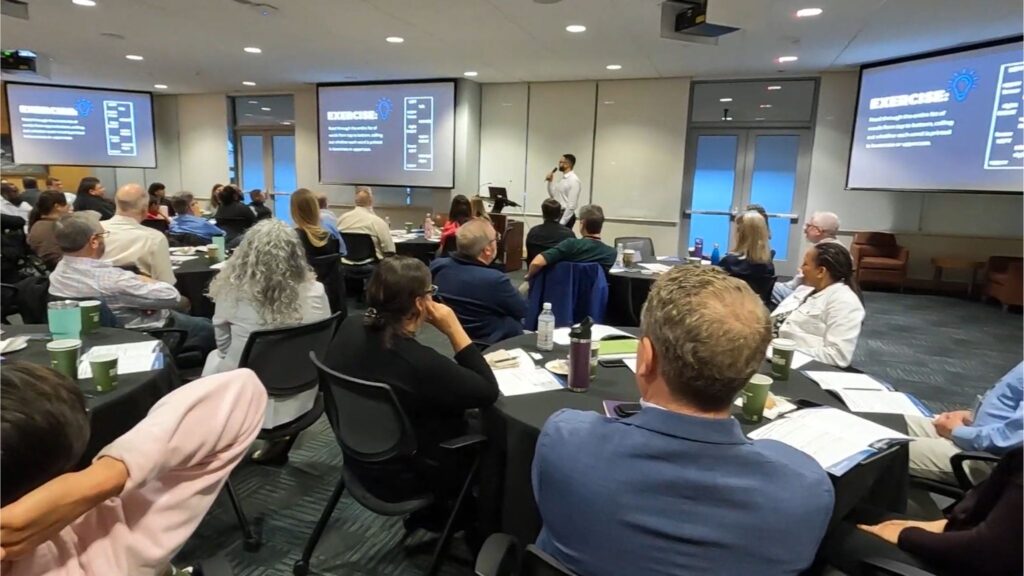
When organizations invest in feedback training, they are investing in more than better conversations. They are strengthening the everyday behaviors that support trust, alignment, engagement, and accountability.
A healthier feedback culture helps teams address issues earlier, reduce avoidant communication, clarify expectations, and prevent small misunderstandings from becoming larger conflicts.
Every Humessence workshop is designed with practical application in mind. Participants leave with shared language, usable frameworks, and specific next steps they can apply in real workplace conversations.
Giving and Receiving Feedback Training Learning Outcomes
Give Feedback with Clarity and Care
Use emotionally intelligent frameworks to communicate feedback clearly while maintaining respect, empathy, and behavioral specificity.
Receive Feedback with More Openness
Build the self-awareness and resilience needed to respond with curiosity instead of immediate justification, defensiveness, or withdrawal.
Separate Intent from Impact
Understand the gap between what was meant and what was experienced—and learn how to bridge that gap through clearer conversation.
Practice, Reflect, and Apply
Engage in realistic feedback conversations, guided reflection, and coaching-style debriefs to build confidence for day-to-day implementation.
“Feedback is not just about the content of what’s being said. It’s about the relationship, the identity, and the emotional triggers it activates.”
— Sheila Heen, co-author of Thanks for the Feedback
Making Feedback a Core Part of Your Team's Culture
Even the best feedback training will fall short if it is not followed by consistent practice and cultural reinforcement. That is why Humessence emphasizes feedback culture training — so your team does not just learn new skills, but begins to live them in everyday communication.
A healthy feedback culture goes beyond performance reviews and one-off comments. It creates a workplace where honest, compassionate communication can happen upward, downward, and peer to peer. When feedback becomes part of daily operations, team members feel more engaged, more aligned, and more accountable to one another.
In this training, we help teams:
Create simple feedback rituals that support regular, low-stakes practice
Build shared agreements around feedback norms and expectations
Strengthen openness, trust, accountability, and psychological safety
Use feedback as a driver of learning, collaboration, and continuous improvement
Whether your team is navigating conflict, adjusting to change, or pursuing ambitious goals, embedding feedback into your culture is one of the most powerful ways to drive progress.

Through our giving and receiving feedback training, we help your team build not just better communicators—but better collaborators.
Want to assess your organization’s feedback readiness?
Explore the five areas leaders should evaluate before building a stronger feedback culture.
Interactive Methods: Role-Plays, Feedback Circles & Real-Time Coaching
The best way to build feedback confidence is to practice. That is why this workshop is highly interactive and grounded in real workplace scenarios.
Role-Plays
Practice realistic workplace feedback scenarios in a structured learning environment.
Feedback Circles
Practice both giving and receiving feedback with clear structure and psychological safety.
Real-Time Coaching
Receive facilitator guidance on language, tone, body language, and follow-up questions.
Reflection and Application
Identify how you personally respond to feedback and what to practice next in order to grow.
Before the session, we meet with your team or sponsor to understand the communication patterns, goals, and challenges that should shape the workshop. From there, we customize exercises that feel relevant to the people in the room.
This experiential approach helps participants move from understanding feedback concepts to actually practicing the behaviors that make feedback more useful.
Delivery Formats: On-Site, Live-Virtual, and Hybrid Cohorts
Every organization and team has different needs, so we offer flexible delivery options for feedback training.
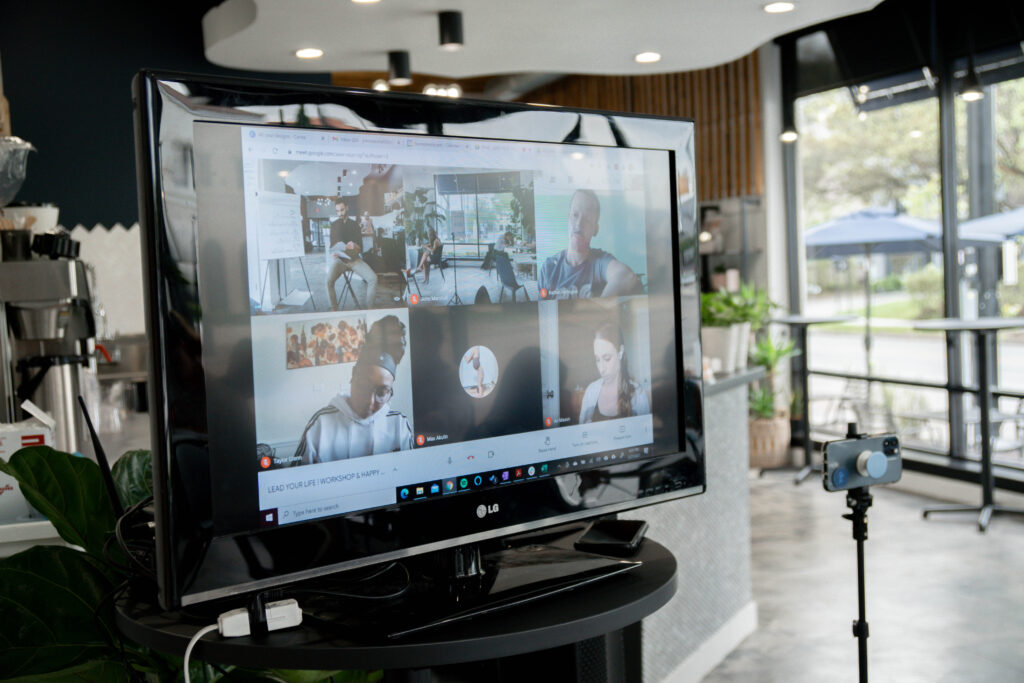
On-Site Training
Immersive, interactive experiences tailored to your workplace, team dynamics, and goals.
Live-Virtual
Ideal for remote or distributed teams that need a practical and engaging online learning experience.
Hybrid Events
A blended format that includes both in-person and online participants, with added facilitation as needed.
Custom Cohorts
Combine feedback training with other communication programs, group coaching, or follow-up case clinics.
Is This Different from Feedback Training for Managers?
Yes. This workshop is designed for teams and mixed groups that want to improve how feedback moves across the organization.
This Team Feedback Workshop
Best for teams, peers, or mixed leader/employee groups
Focuses on feedback culture and two-way communication
Builds shared team language
Supports peer-to-peer and cross-functional feedback
Feedback Training for Managers
Best for managers, supervisors, and people leaders
Focuses on employee feedback and performance reviews
Builds manager confidence and leadership communication
Supports direct report development and accountability
Feedback Workshop Success Stories
These stories highlight the real-world outcomes possible when organizations move from fear-driven silence to feed-forward dialogue.




Your Step-by-Step Workshop Journey
We make it simple for organizations to bring feedback training to their teams.
Consultation
We align on your team’s goals, audience, and desired outcomes.
Scenario Development
We gather insight into your feedback culture and customize workplace examples.
Workshop Delivery
Participants engage in live facilitation, structured practice, and coaching-style debriefs.
Action Planning
Participants identify specific feedback behaviors they can apply immediately.
Follow-Up Support
Optional coaching or advanced sessions can reinforce learning over time.

Giving and Receiving Feedback Training Facilitators

Brett Larson, MBA, CPC, ELI-MP
Brett’s expertise in leadership development, organizational behavior, and coaching makes him a powerful guide for teams learning to give and receive feedback more effectively. As the author of Discovering Leaders Within, he brings a practical, empathetic approach to behavior change, communication, and team growth.

John Marshall, MS, PCC, NBC-HWC
John’s background in leadership coaching, positive psychology, emotional intelligence, and mindfulness-based communication helps participants approach feedback with both clarity and humanity. His facilitation style supports teams in building trust, practicing honest conversations, and receiving feedback with more openness.
Feedback Training Investment and Delivery Methods
Choose the format that best fits your team size, location, and learning goals. Each option includes interactive facilitation, practical exercises, and workshop resources participants can continue using after the session.
90-Minute Feedback Culture Seminar
For leadership teams, all-hands sessions, lunch-and-learns, or cross-company groups that need a practical introduction to healthier feedback conversations.+ Travel, Expenses, & Materials
-
90-minute in-person or virtual seminar
-
Customized examples based on your team’s goals and feedback culture
-
Self-reflective exercises and discussion prompts
-
Practical feedback frameworks participants can apply immediately
-
Ideal for awareness-building, company offsites, or culture initiatives
In-Person Team Feedback Workshop
For employee groups, mixed employee/leader groups, or intact teams of up to 24 participants.+ Travel, Expenses, & Materials
-
2.5-hour in-person workshop
-
Customized workplace scenarios and feedback practice
-
Interactive group and self-reflective exercises
-
Giving and receiving feedback skill-building
-
Professionally printed workshop manual with take-home resources
Virtual Team Feedback Workshop
For remote, distributed, or mixed employee/leader groups of up to 48 participants.(No additional fees)
-
2.5-hour live virtual workshop
-
Customized workplace scenarios and breakout practice
-
Interactive group and self-reflective exercises
-
Giving and receiving feedback skill-building
-
Fillable digital workshop manual with take-home resources
Ready to Bring Giving and Receiving Feedback Training to Your Team?
Call today or submit the form below to secure the date for your workshop
- (832) 800-3596
- info@humessence.com
Feedback Training FAQ
Who is this workshop designed for?
This workshop is designed for intact teams, cross-functional groups, project teams, and mixed employee/leader groups that want to strengthen trust, communication, and feedback culture.
Is this feedback training only for managers?
No. This page is focused on team-wide feedback training. It supports peer-to-peer feedback, cross-functional communication, and feedback culture across the organization. For manager-specific employee feedback conversations, Humessence also offers Feedback Training for Managers.
What makes this feedback training different from others?
Humessence blends practical feedback frameworks with emotional intelligence, psychological safety, and human-centered facilitation. Participants do not just learn what to say; they practice how to stay clear, present, and constructive in real feedback conversations.
How long is the workshop? Is that flexible?
Common formats include a 90-minute seminar and a 2.5-hour workshop. We can recommend the best format based on your audience, goals, and desired depth of practice. If your event has time constraints that do not support our common formats, we can discuss flexibility without losing outcome integrity.
Is the content customizable for our team or industry?
Yes. We meet with you before the workshop to understand your team’s goals, communication patterns, and real workplace scenarios so the session feels relevant and immediately usable.
Can this feedback workshop be delivered virtually?
Yes. The workshop can be delivered in person, live-virtual, or in a hybrid format. Virtual sessions are designed to remain interactive through discussion, reflection, breakout practice, and facilitated debriefs.
Will attendees receive resources to take home?
Yes. Participants receive workshop materials and practical tools they can continue using after the session.
Is there follow-up support after the workshop?
Yes. Follow-up support can include group coaching, advanced communication sessions, leadership development modules, or additional practice sessions. Organizations commonly pair this workshop with our Conflict Management Training and Psychological Safety Training for Leaders.
How can we book a workshop?
You can schedule a call or submit the form on this page. We’ll discuss your goals, audience, preferred format, and available dates.
Still Unsure? Schedule a Call
Subscribe Today!
Want thoughtfully crafted updates, tips, and strategies to help you grow personally and professionally? How about event promos? Then fill out the form below!